📍 RIYADH, CENTRAL PROVINCE • CRITICAL INFRASTRUCTURE FIRE PROTECTION

Linear Heat Detection Company in Riyadh

Global Sensing supplies linear heat detection systems for industrial facilities, electrical cable galleries, warehouses and infrastructure projects in Riyadh, Saudi Arabia.

As a linear heat detection company in Riyadh, we help project teams select heat-sensitive cables, plan monitoring routes and define fire alarm connections. Our engineering services cover design, equipment supply, installation, testing and commissioning.

From conveyor systems to underground electrical infrastructure, the objective is to identify hazardous temperatures at vulnerable locations and deliver an actionable alarm. Explore our range of linear heat detectors in Saudi Arabia.

Request a Project Assessment

Consult with our fire protection engineers for your Riyadh industrial facility or tunnel project.
✓ Saudi Fire Code (SBC 801) Aligned ✓ Civil Defense Monitored Interfaces ✓ Saudi Engineering Operations (Jeddah HQ) ✓ 15% Saudi VAT Identified
HIGH-TEMPERATURE INDUSTRIAL ENVIRONMENT • FIRE MITIGATION

Why Linear Heat Detection Matters in Riyadh

Riyadh’s industrial facilities, infrastructure projects and high summer temperatures require fire detection equipment selected for the actual operating environment.

In manufacturing plants, heat can develop around conveyor bearings and electrical equipment. Underground cable galleries introduce different risks because equipment may be difficult to inspect continuously.

Traditional smoke detection isn’t always the best option where dust, ventilation or restricted access affects detector performance.

Detection Mechanism Standard:

Linear heat detection in Riyadh uses a heat-sensitive cable installed along a defined route to identify abnormal temperatures and initiate a fire alarm when the selected system’s detection criteria are reached.

The cable provides monitoring along the protected route, rather than measuring temperature at only one fixed location. Explore our dedicated systems for linear heat detection in Jeddah and cross-provincial infrastructure.
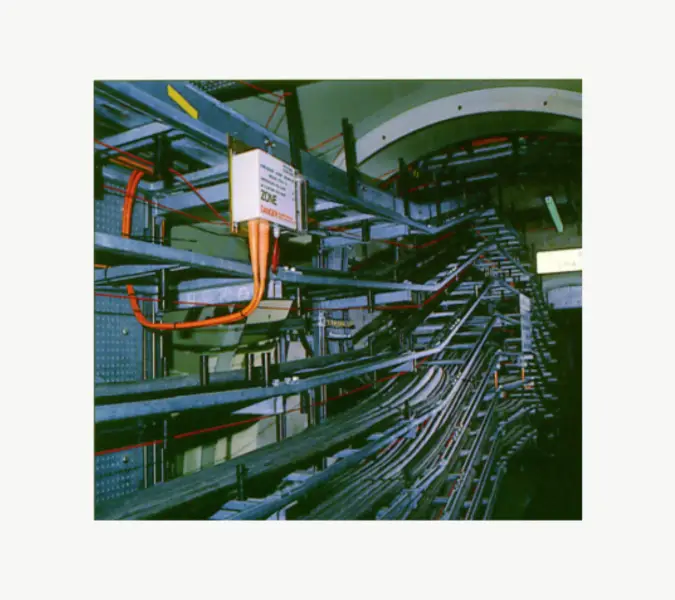
Linear heat detection cable installation for cable trays and industrial corridors in Riyadh

Continuous temperature and overheat monitoring along high-risk cable trays, conveyor lines, and utility tunnels in Riyadh.

REGIONAL INFRASTRUCTURE MAPPING • RIYADH & GREATER METRO

Where Riyadh Facilities Need Linear Heat Detection

Riyadh has several industrial and infrastructure locations where continuous heat monitoring is relevant to fire protection design.
📍

Riyadh First Industrial City, Al Malaz

Manufacturing workshops and industrial buildings with electrical cable trays, machinery and mechanical equipment.

📍

Riyadh Second Industrial City, Al Kharj Road

Production facilities where conveyors, utility distribution and electrical installations may require heat monitoring.

📍

Riyadh Third Industrial City

Industrial developments where cable routing and fire alarm interfaces can be incorporated into new facility designs.

📍

Riyadh Metro corridors

Underground tunnels and utility spaces where long sensing routes can help monitor inaccessible locations.

📍

Princess Nourah Bint Abdulrahman University area

Large campus infrastructure and underground electrical cable galleries requiring continuous temperature monitoring.

📍

King Khalid International Airport logistics corridor

Cargo handling and logistics facilities with electrical equipment, conveyor systems and operational access restrictions.

📍

King Abdullah Financial District (KAFD)

Commercial infrastructure where underground utility spaces and enclosed service areas may require specialized heat detection.

* These are relevant applications and service areas, not claims that Global Sensing has completed installations at these locations.

SECTOR ARCHITECTURES • CRITICAL THERMAL ZONES

Linear Heat Detection Applications for Riyadh Industries

Riyadh projects need detection cable positioned close to credible heat sources, with the sensing technology selected according to ambient temperature, equipment exposure and the approved fire strategy.
POWER DISTRIBUTION & RISERS

Cable Trays and Electrical Galleries

Riyadh electrical galleries may contain long cable routes where overheating can develop around damaged connections or overloaded equipment.

Heat-sensitive cable can be installed along suitable tray routes, with alarm zones assigned to identifiable sections. The design must consider cable supports, access points and the manufacturer’s installation instructions.

Tray Sinusoidal Routing
HEAVY INDUSTRIAL LOGISTICS

Conveyor Belts and Manufacturing Equipment

Riyadh manufacturing facilities may need heat detection near conveyor rollers, drive assemblies and other components exposed to friction-related heating.

Sensing cables can follow approved equipment routes, provided their mounting positions avoid unnecessary mechanical damage. The objective is to report abnormal heating at the protected location.

Friction Overheat Alarm
EXTENDED DISTANCE INFRASTRUCTURE

Underground Tunnels and Utility Corridors

Riyadh tunnel and utility infrastructure may require monitoring across long distances where conventional point detection is less practical.

For these applications, engineers should compare conventional heat-sensitive cable with fiber-optic distributed temperature sensing, depending on distance, location accuracy and system requirements.

Fiber-Optic DTS Supported
HARDWARE SELECTION MATRIX • SYSTEM SELECTION

Choosing the Right Linear Heat Detection System

Riyadh linear heat detection projects should compare cable technology, operating temperature and alarm-location requirements before specifying equipment.
TechnologySuitable applicationMain consideration
Digital fixed-temperature sensing cableCable trays and industrial equipmentActivates at its specified temperature; affected cable sections may require replacement
Analogue or resettable sensing cableSelected industrial monitoring applicationsTemperature response and reset behaviour depend on the manufacturer
Fiber-optic linear heat detectionLong tunnels and electrical galleriesDistributed temperature monitoring with model-dependent location accuracy
Point heat detectorsIndividual enclosed equipment areasDetection at a defined position rather than along an extended cable
☀️

Riyadh Summer Thermal Calibration Mandate:

Global Sensing supplies linear heat detectors in Saudi Arabia for fire detection applications. The final equipment specification must confirm which technologies are available, approved and suitable for your project.

Important Warning: Selecting the lowest alarm temperature isn’t necessarily safer. If a cable’s normal environment approaches its activation rating during a Riyadh summer, the design may produce unwanted alarms.
CERTIFIED FIRE HARDWARE • SAUDI ARABIA SUPPLY

Product Gallery: Linear Heat Detection Hardware Suite

Explore Global Sensing’s comprehensive range of certified linear heat detection cables, controllers, and accessories deployed across Saudi Arabia. Browse our full products catalog.
Digital fixed temperature linear heat detection cable for Riyadh cable trays
DIGITAL FIXED CABLE

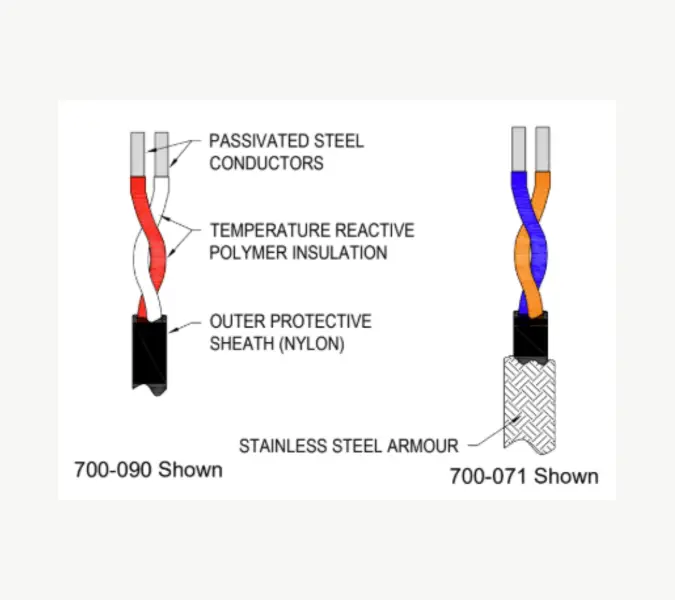
Digital Fixed-Temperature Sensing Cable

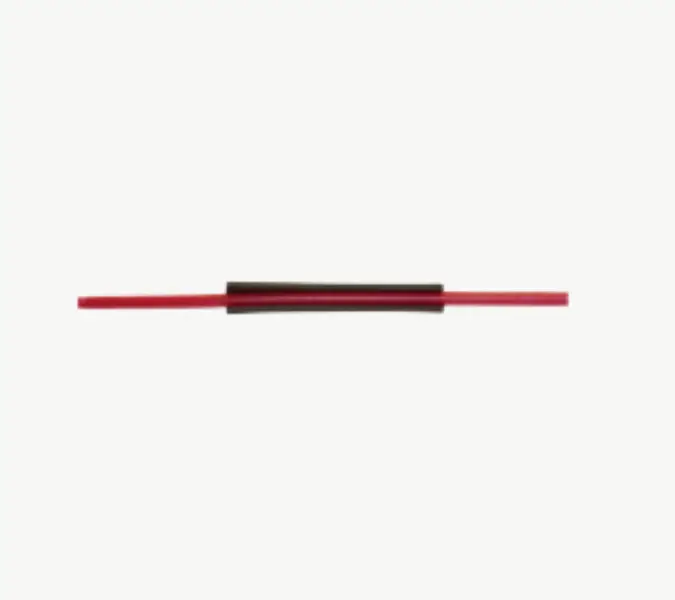
Twisted-pair steel conductors with heat-sensitive polymer insulation activating instantaneously at pre-calibrated temperatures (68°C, 88°C, 105°C, 180°C).
Fixed Temp (UL / FM)
Analogue resettable linear heat detection cable for industrial machinery in Riyadh
RESETTABLE ANALOGUE

Analogue & Resettable Linear Heat Cable

Continuous polymeric resistance sensor monitoring rate-of-rise and localized overheating without requiring cable replacement following non-destructive events.
Resettable & Rate-of-Rise
Fiber optic distributed temperature sensing DTS controller for Riyadh metro tunnels
DISTRIBUTED TEMPERATURE SENSING

Fiber-Optic DTS Master Controller

Raman-scattering laser telemetry unit measuring continuous real-time temperature profiles across up to 10km of optical fiber with 1-meter location precision.
Long Distance (Up to 10km)
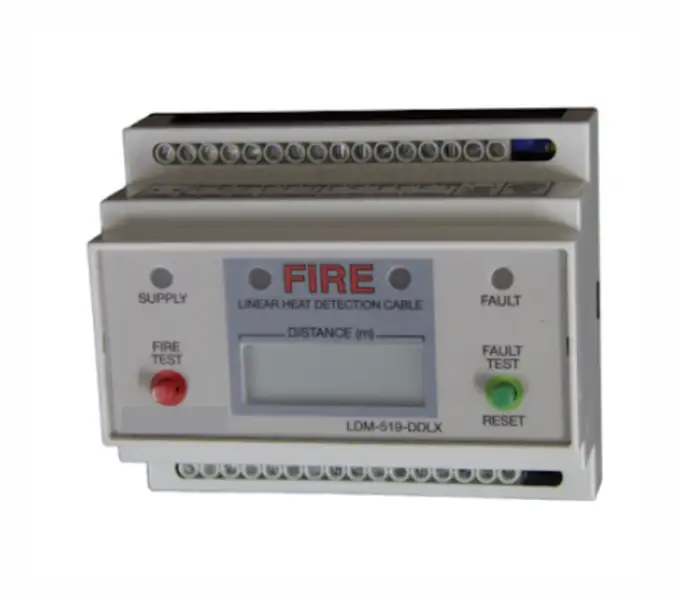
Multi zone linear heat detection interface control unit panel
INTERFACE CONTROLLER

Multi-Zone Linear Heat Alarm Panel

Microprocessor interface panel providing monitored zone isolation, digital distance-to-fault readout, relay outputs, and FACP input module compatibility.
FACP Monitored Interface
Mounting clips and brackets for linear heat detection cable trays in Riyadh
MOUNTING HARDWARE

Cable Tray Clips & Retention Brackets

Heavy-duty galvanized and stainless-steel edge clips maintaining optimal sinusoidal spacing along perforated cable trays and industrial conveyors.
Galvanized & Stainless
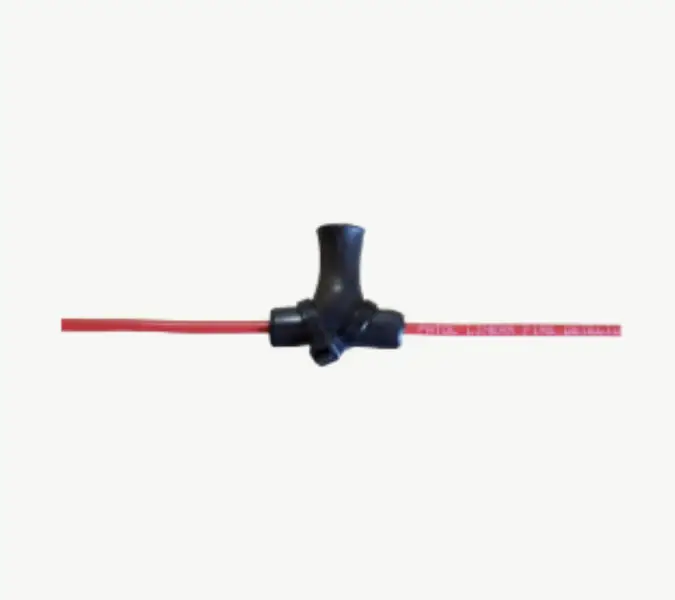
End of line test and termination junction box for linear heat detection
TERMINATION & TEST

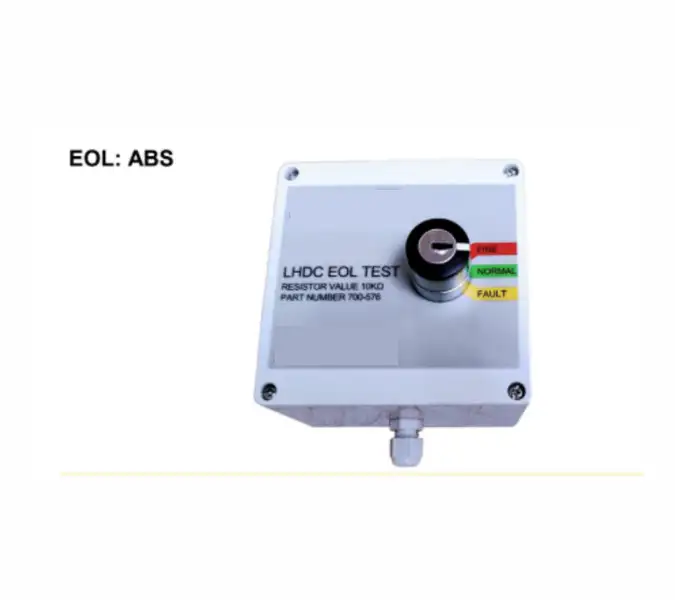
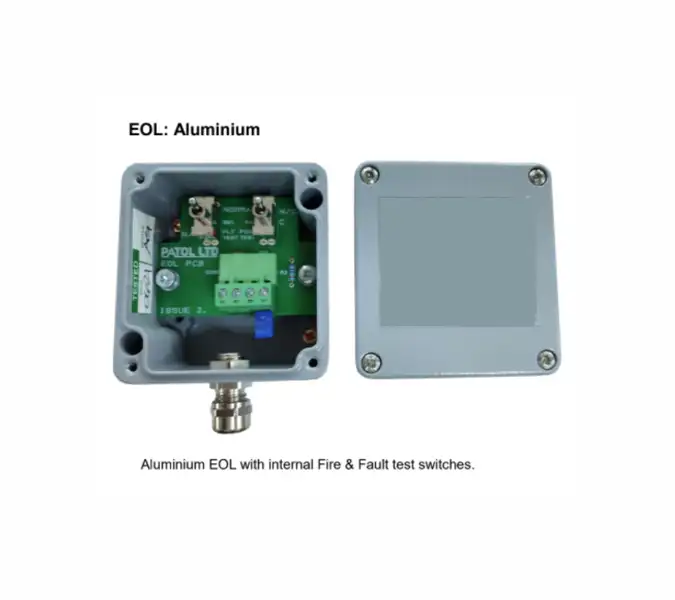
End-of-Line Test & Termination Modules

Weatherproof IP66 termination boxes equipped with built-in test switches allowing routine loop continuity verification without damaging installed cable.
IP66 Test Junction
FIRE SYSTEM INTEROPERABILITY • CIVIL DEFENSE READY

Fire Alarm and Building System Integration

Riyadh fire detection installations must communicate alarms and faults to the approved fire alarm system.

Depending on the selected sensing controller and interface, project engineers may evaluate the following connections:

[VERIFY: Controller models, protocol support and named-platform compatibility before publication.]

Mandatory Mandate: Fire alarm integration requires approved equipment, the correct interface modules and testing. Building management monitoring does not replace a required fire alarm connection.

Evaluated Fire & BMS Interfaces

• Fire Alarm Control Panel (FACP)
Receives defined fire and fault indications from the approved LHD interface.
• Honeywell NOTIFIER
A potential fire alarm panel connection through a compatible monitored input module.
• Siemens Cerberus PRO
A potential alarm interface using approved fire alarm modules.
• Johnson Controls SIMPLEX
A potential connection for supervised fire alarm input signals.
• Schneider Electric EcoStruxure Building Operation
A potential building monitoring destination for approved status reporting.
• Modbus TCP/IP
A possible SCADA connection for compatible monitoring controllers.
• BACnet/IP
A possible building management interface through a supported controller or gateway.
• Dry-Contact Relay Outputs
A possible means of reporting defined alarm and trouble conditions to compatible control equipment.
TURNKEY ENGINEERING LIFECYCLE • RIGOROUS HANDOVER

Linear Heat Detection Installation and Commissioning in Riyadh

Riyadh installations should begin with a risk assessment, approved cable route drawings and a defined system-testing procedure. Global Sensing’s engineering services support these project activities:

01

Site survey

Identify potential overheating locations, ambient temperatures, electrical installations and equipment access restrictions.

02

System design

Determine cable routes, detection zones, controller positions and proposed alarm interfaces.

03

Equipment selection

Review heat activation ratings, protective cable construction, available approvals and installation requirements.

04

Installation

Mount approved sensing cable and terminate compatible monitoring equipment according to the specified design.

05

Testing and commissioning

Verify cable integrity, applicable fire and fault signals, alarm-zone identification and communication with the fire alarm system.

06

Documentation

Prepare the agreed as-built routes, test records, operating instructions and handover documents.
⚠️

Functional Acceptance Testing Standard:

An installation shouldn’t be approved simply because a control panel displays a normal condition. The configured alarm and fault paths must also pass their acceptance tests.

Explore our engineering services for additional project delivery capabilities.

REGULATORY COMPLIANCE • STATUTORY GOVERNANCE

Saudi Fire Safety Standards and Compliance

Riyadh linear heat detection projects must be assessed against the approved fire protection strategy and applicable Saudi requirements.
NATIONAL FIRE FRAMEWORK

Saudi Fire Code (SBC 801)

The Saudi Fire Code (SBC 801) provides the national fire protection framework governing commercial and industrial fire alarm installations across the Kingdom.
STATUTORY OVERSIGHT

Saudi Civil Defense Guidance

Installation and approval requirements should also be reviewed against Saudi Civil Defense guidance to ensure complete licensing compliance and building clearance.
TECHNICAL STANDARDS

NFPA 72 & Product Listings

Equipment selection may refer to NFPA 72 and relevant product listings (UL, FM, CE) where required by the approved specification.
INSTALLATION GOVERNANCE

System-Wide Compliance Mandate

A manufacturer’s approval does not automatically establish compliance for an entire installation. Cable selection, wiring, interfaces and acceptance testing must match the project requirements.
ENGINEERING INTEGRITY • PROVEN FIELD EXPERTISE

Why Choose Global Sensing for Riyadh Projects?

Global Sensing provides sensing products alongside engineering design, supervision, installation, testing and commissioning services.

Our published portfolio includes linear heat detection equipment for cable trays, tunnels and industrial environments. For procurement, review our company certifications and request the relevant product datasheets, approvals and technical submissions.

Design Strength & Fire Strategy Boundaries:

The strength of a heat detection design lies in its ability to identify the protected area and communicate the alarm correctly.

A limitation matters: linear heat detection is not a substitute for every smoke detector, flame detector or fire suppression system. The appropriate detection method depends on the approved fire protection design.

PROJECT ESTIMATION • COMMERCIAL TRANSPARENCY

Linear Heat Detection System Cost in Riyadh

Riyadh linear heat detection costs depend on the technology, cable length and system integration requirements. The main pricing factors are:
1

Sensing cable length

Longer routes increase equipment and installation quantities.
2

Detection technology

Fiber-optic monitoring generally requires more specialized hardware than basic fixed-temperature cable.
3

Temperature rating

Specialized cable construction and environmental protection may affect pricing.
4

Number of monitoring zones

More zones can increase controller and interface requirements.
5

Installation access

Elevated conveyors and restricted electrical galleries may increase labour effort.
6

Testing and integration

Additional alarm interfaces, functional testing and documentation increase the project scope.

Formal SAR Quotations & ZATCA 15% VAT:

Global Sensing provides project-specific quotations in Saudi Riyals (SAR). The standard Saudi VAT rate is 15% on applicable taxable supplies according to ZATCA VAT Guidance.

15% Saudi VAT Identified

Submit your cable-route drawings, equipment details and fire alarm specifications for an itemized quotation.

REGIONAL DISPATCH • SERVICE COVERAGE

Linear Heat Detection Service Coverage in Riyadh

Global Sensing handles Riyadh project enquiries through its Saudi operations, with coordination from the company’s confirmed Jeddah office.

Technical scope reviews can begin remotely. Site surveys and installation visits are arranged according to the project requirements and confirmed scheduling.

Service areas include Riyadh First, Second and Third Industrial Cities, the airport logistics corridor, metro infrastructure areas and KAFD.

For company directions, see the Global Sensing Google Maps listing for the Jeddah office.

TECHNICAL FIRE FAQ • RIYADH OPERATIONAL GUIDANCE

Frequently Asked Questions

Essential technical, installation, and compliance considerations for linear heat detection in Riyadh.
Riyadh linear heat detection costs depend on cable length, temperature rating, detection technology and alarm interface requirements. A warehouse conveyor has a different installation scope from an underground electrical gallery. Global Sensing can prepare a quotation in SAR after reviewing the sensing routes and equipment specification.
Riyadh installation timelines depend on cable length, equipment availability, installation access and required fire alarm testing. Work inside an operating industrial plant may require scheduled shutdowns or restricted maintenance periods. The approved programme should include design review, cable installation, interface configuration and commissioning.
Riyadh linear heat detection systems do not automatically require cloud hosting. Many compatible controllers report alarms locally through a fire alarm panel. Fiber-optic systems may also support network monitoring, depending on their configuration. Connected systems should follow the operator’s applicable information-security and project requirements.
Global Sensing coordinates Riyadh project enquiries through its Saudi engineering operations, based at its confirmed Jeddah office. Initial discussions can review cable-route drawings, fire alarm requirements and equipment conditions remotely. On-site surveys can then be scheduled according to the project scope and engineer availability.
Riyadh facilities need heat detection cable selected for the highest expected operating temperature at the actual installation location. The alarm rating must remain appropriate for both normal conditions and the required fire response. Manufacturer datasheets and the approved fire design determine the final temperature grade.
Riyadh facilities may connect compatible linear heat detection controllers to existing fire alarm systems through approved interfaces. The arrangement depends on the panel model, input modules and required supervision. Engineers should verify fire and fault signals, monitoring-zone identification and acceptance testing before approving the connection.
SAUDI ARABIA ENGINEERING DESK • RIYADH PROJECTS

Request a Linear Heat Detection Assessment in Riyadh

Global Sensing supplies linear heat detection systems and engineering services for Riyadh industrial and infrastructure projects.

Share your equipment drawings, cable routes and fire alarm requirements. Our team can review the proposed scope and discuss suitable detection equipment.

For the Western Region, visit our linear heat detection in Jeddah page.