Global Sensing provides perimeter intrusion detection solutions for sensitive facilities, protected compounds and critical infrastructure projects in Riyadh, Saudi Arabia.
As a perimeter intrusion detection company in Riyadh, we offer specialized sensing solutions with a focus on distributed fiber-optic technology. Our engineering capabilities include system design, equipment supply, installation, testing and commissioning.
For security teams responsible for long boundaries, the priority is to identify a possible breach, locate the affected area and communicate the alarm to the people authorized to respond.
Get expert consultation and custom pricing for your facility
Riyadh’s industrial expansion, logistics infrastructure and sensitive government facilities create a need for security monitoring beyond conventional gates and cameras.
A fence provides a physical barrier, but it doesn’t necessarily tell operators when someone attempts to climb or cut it. A camera may provide visual evidence, yet detecting suspicious movement over an extensive boundary requires a suitable monitoring design.
Perimeter intrusion detection in Riyadh uses sensors along or around a protected boundary to identify potential unauthorized entry and report the affected location to a security monitoring system.
Riyadh’s heat, wind and blowing sand can affect outdoor equipment. Flexible fencing can also move during strong winds, producing unwanted vibration alarms.
Sensor selection needs to account for those conditions. A system that repeatedly generates unexplained alarms may become difficult for security personnel to operate effectively.
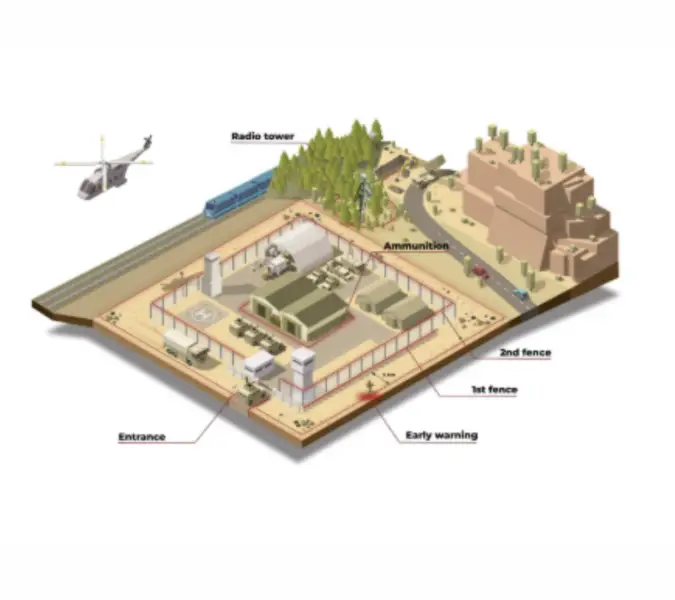
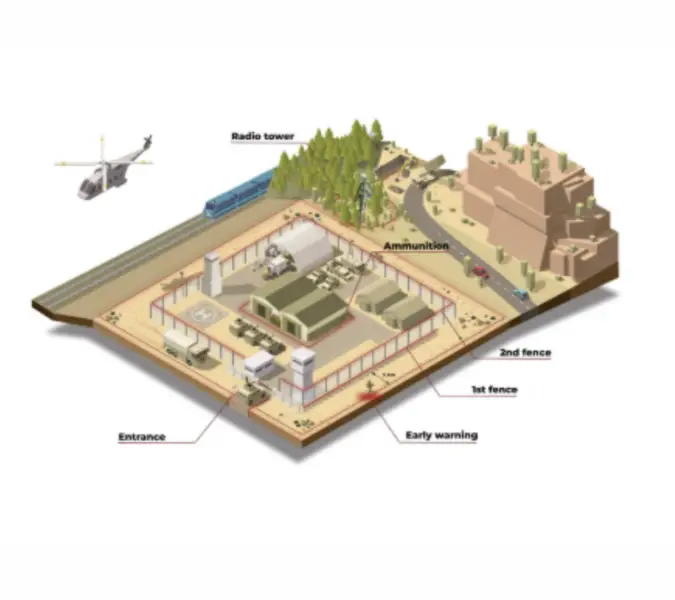
Riyadh's industrial areas, logistics infrastructure and large development projects contain facilities with different physical security requirements.
Established industrial premises with vehicle entrances, service boundaries and equipment storage areas.
Larger factory sites where long fence lines, loading gates and utility areas may require separate detection zones.
Industrial developments where sensor cable routes can be planned alongside new perimeter infrastructure.
Logistics and cargo operations where controlled boundaries and security response procedures are operational considerations.
Logistics facilities near King Khalid International Airport with potential needs for coordinated boundary and access monitoring.
Large development and infrastructure sites where temporary or permanent perimeter requirements should follow approved security plans.
Hospitality and mixed-use development areas where construction boundaries and completed facilities may require different monitoring arrangements.
These locations are examples of relevant markets, not completed Global Sensing projects.
Military and defense facilities have additional security requirements. Their precise locations and system specifications should be handled through authorized project channels rather than public website descriptions.
Riyadh's extensive protected boundaries can benefit from fiber-optic sensing where the installed technology is suitable for the fence and operating environment.
Global Sensing's published product portfolio identifies perimeter intrusion detection for military and defense applications, including distributed fiber-optic sensing.
Riyadh fence-mounted sensing systems can monitor mechanical disturbances caused by activity along a protected boundary.
A compatible fiber-optic cable may be installed along approved fence routes and connected to a monitoring unit that interprets disturbances.
The selected controller determines how events are classified and how accurately their positions can be reported.
Riyadh sites that require a concealed sensing route may evaluate buried fiber-optic technology, subject to product availability and project suitability.
Buried installation requires consideration of soil conditions, underground services and civil works.
The selected system's ability to identify digging or movement must be demonstrated through approved testing rather than assumed from the technology name.
Riyadh defense and restricted-access facilities may require specialized sensing equipment, controlled communications and additional environmental protection.
Global Sensing's published portfolio includes tactical fiber-optic solutions intended for such environments.
The exact equipment specification, protective construction and applicable approvals should be confirmed during authorized procurement.
Riyadh security projects should compare detection technologies according to boundary construction, terrain, detection requirements and the available response infrastructure.
| Detection technology | Typical application | Engineering consideration |
|---|---|---|
| Fence-mounted fiber-optic sensing | Long fenced compounds | Fence condition, mounting and disturbance classification |
| Buried fiber-optic sensing | Selected concealed perimeter routes | Civil works, soil conditions and approved sensor capability |
| Microwave barriers | Defined open-ground approaches | Clear detection corridors and alignment |
| Ground surveillance radar | Wide open areas | Terrain, line of sight and event verification |
| Video assessment | Visual confirmation of detected events | Lighting, camera coverage and operator response |
Fiber-optic sensing is the confirmed focus of Global Sensing's published perimeter portfolio. Other technologies are comparison options, not a claim that Global Sensing currently supplies every listed system.
For Riyadh projects, detection technology should follow the approved security requirement rather than simply the longest available cable specification.
Riyadh perimeter systems need alarm reporting that identifies the monitored boundary section and supports a defined security response.
Depending on the selected controller, the following interfaces and platforms may be evaluated:
[VERIFY: Supported controllers, communication protocols and software integrations before publication.]
The design should establish which alarm reaches the security control room, how its location is displayed and what the operator is expected to do.
An intrusion alarm without an assigned response procedure is incomplete.
Explore certified distributed fiber-optic cables, intelligent zone controllers, and tactical communication gateways deployed for facility boundary monitoring across Riyadh and Saudi Arabia.
High-sensitivity optical fiber cable designed for fence fabric attachment, identifying cut, climb, and ladder attempts along long perimeters.
Multi-Kilometer Continuous Line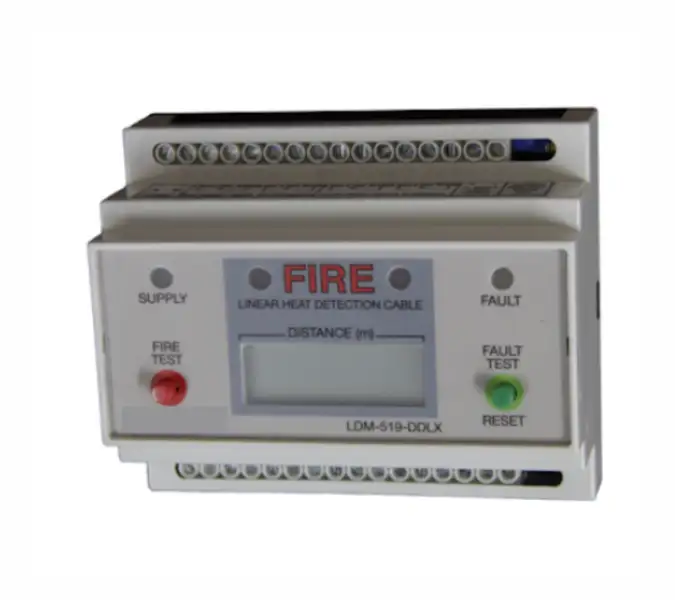
DIN-rail intelligent controller capable of signal classification, disturbance frequency filtering, and nuisance alarm suppression under high desert winds.
Dry-Contact & Modbus TCP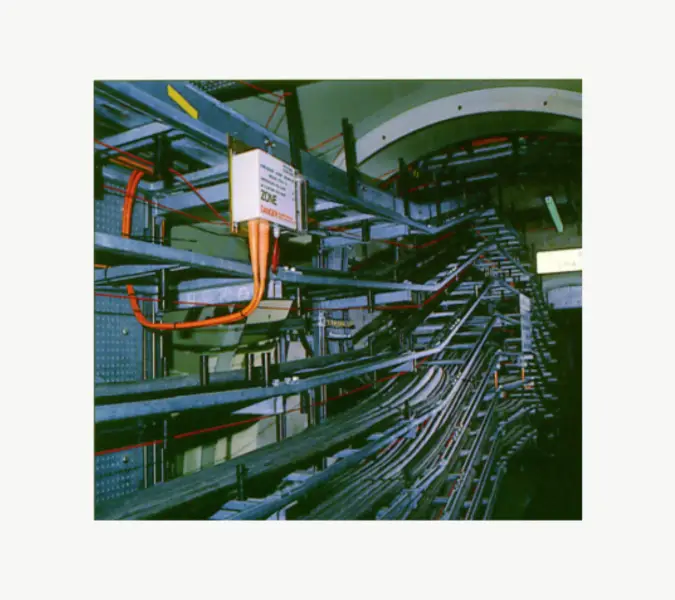
IP66 rated outdoor security processing unit engineered for ambient temperatures exceeding +55°C and intense Riyadh solar exposure.
IP66 Harsh Desert Proof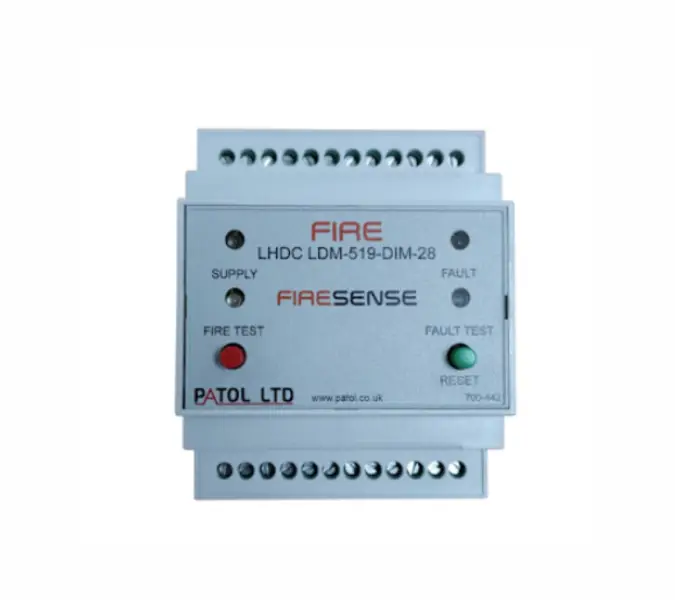
Direct-burial fiber sensing route designed to identify footsteps, crawling, and tunneling activity along open-terrain security corridors.
Underground Covert Detection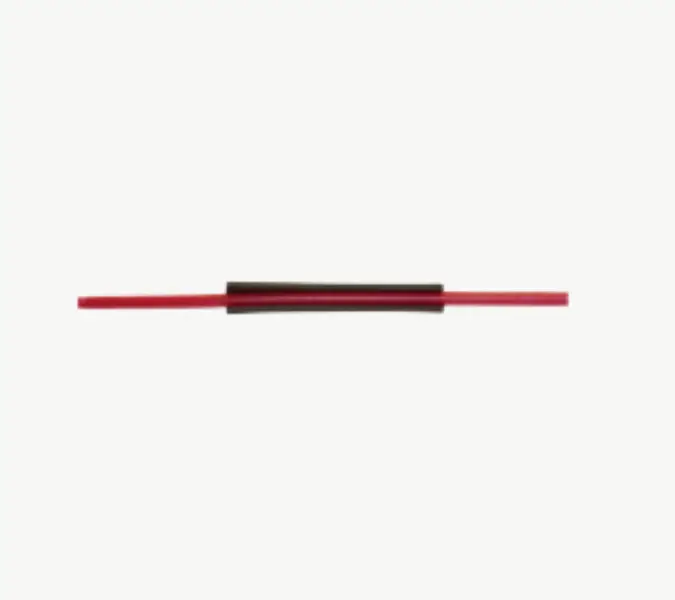
High-speed IP security gateway linking intrusion zone coordinates directly with Genetec Security Center and Milestone XProtect camera PTZ presets.
Automated PTZ Slew to Zone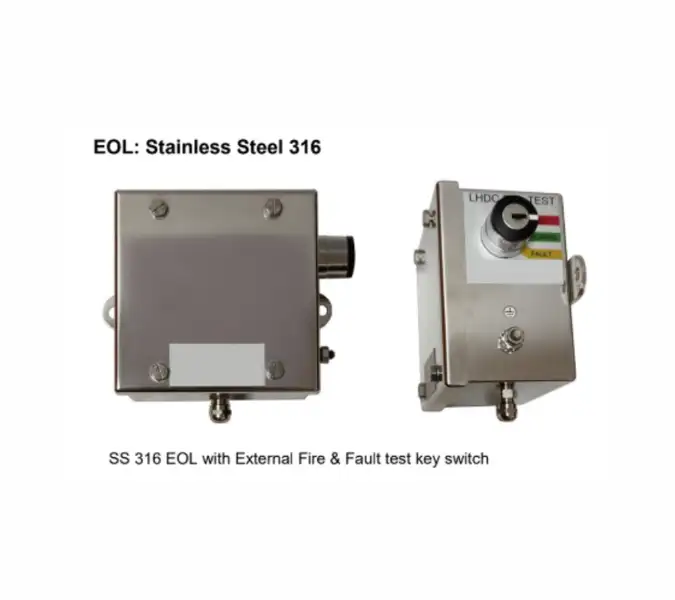
Tamper-supervised optical splice enclosure maintaining signal continuity across gates, compound corners, and zoned boundary breaks.
Tamper Supervised HousingRiyadh security installations should begin with an approved boundary survey and the required detection performance criteria.
Global Sensing's engineering services cover design, installation, supervision, testing, commissioning and maintenance activities.
Review the existing fence, terrain, gates, nearby roads, environmental conditions and equipment access.
Define the sensing routes, alarm zones, cable protection and monitoring equipment locations.
Review controller capabilities, cable construction, environmental protection and the applicable project specifications.
Install approved sensing equipment and configure zone references, alarm reporting and fault monitoring.
Test the agreed detection scenarios, cable faults and alarm communication. Check nuisance-alarm behaviour under representative operating conditions.
Prepare the agreed cable routes, controller configuration, alarm-zone schedule and acceptance records.
A controller displaying a normal status does not prove that the entire boundary is protected. Field acceptance must demonstrate that the installed sensing route reports the events required by the project specification.
For wider project delivery capabilities, see our engineering services.
Riyadh perimeter protection projects must be designed according to the security requirements applicable to the facility.
Facilities subject to the High Commission for Industrial Security (HCIS) may need to comply with specific industrial security directives and an approved security design. Requirements depend on the facility classification and the scope determined by the competent authority.
Review HCIS Directives ↗The National Cybersecurity Authority's Operational Technology Cybersecurity Controls are relevant to covered operational technology environments, including applicable physical security monitoring requirements.
View NCA OTCC Regulations ↗Where perimeter detection is connected to cameras, the Saudi Law on the Use of Security Surveillance Cameras and associated requirements should be reviewed. Camera recordings, access permissions and connected-system security must follow the applicable rules.
Read Surveillance Cameras Law ↗Global Sensing should not claim HCIS certification or approval for a specific solution unless the relevant project and equipment documentation confirm it.
Global Sensing offers specialized sensing solutions and engineering services for sensitive infrastructure applications.
Our published company portfolio includes distributed fiber-optic perimeter sensing for military and defense environments. It also identifies design, installation, testing and commissioning among our engineering capabilities.
The value of an engineered perimeter system is in its sensor positioning, clear alarm zones and verified monitoring response.
For procurement, review our company certifications and request the specific product datasheets, applicable approvals and technical documentation.
Perimeter intrusion detection provides an alert. It doesn't physically prevent entry or replace fencing, trained security personnel and an approved response procedure.
Riyadh perimeter intrusion detection costs depend on boundary length, sensing technology, site conditions and security-system integration.
Global Sensing can prepare a project-specific quotation in Saudi Riyals (SAR). Saudi Arabia's standard VAT rate is 15% on applicable taxable supplies (ZATCA VAT Guidance).
Submit the available boundary drawings, perimeter length and required detection criteria to request an accurate scope assessment.
Global Sensing coordinates Riyadh enquiries through its Saudi operations, with its confirmed office in Jeddah.
Initial technical discussions can be conducted remotely. Any Riyadh site survey or installation visit is subject to project scope, required access approvals and confirmed engineer availability.
Relevant service areas include Riyadh First, Second and Third Industrial Cities (MODON), airport-area logistics facilities, the Riyadh Integrated Logistics Zone, Diriyah and Qiddiya.
Detailed technical and commercial answers regarding fiber-optic boundary sensing, site surveys, and security approvals.
Riyadh perimeter intrusion detection costs depend on the boundary length, sensing technology, number of zones and monitoring requirements. A factory fence and a sensitive government compound may require different equipment and approval processes. Global Sensing can prepare a SAR quotation after reviewing the approved technical scope.
Riyadh installation timelines depend on site access, cable length, boundary condition and required security approvals. Work at restricted facilities may require additional coordination and authorized installation windows. The agreed project schedule should include boundary assessment, equipment installation, alarm configuration, functional testing and acceptance documentation.
Riyadh perimeter intrusion detection systems do not automatically require cloud hosting. A compatible controller may communicate with an on-site security monitoring system. Where the architecture involves remote access, personal data or regulated operational technology, applicable Saudi security and data-protection requirements must be assessed before deployment.
Global Sensing coordinates Riyadh perimeter intrusion enquiries through its Saudi engineering operations based in Jeddah. Initial technical reviews can examine authorized boundary drawings, equipment requirements and detection criteria remotely. On-site surveys are arranged according to project scope, security permissions and confirmed engineer availability.
Riyadh facilities can be assessed for fence-mounted fiber-optic intrusion detection, but suitability depends on the fence construction and condition. Loose sections or unstable supports may create nuisance alarms. The selected sensing cable and controller should be evaluated against the existing boundary before an installation design is approved.
Riyadh facilities may integrate compatible perimeter intrusion controllers with approved video monitoring systems. The arrangement depends on available alarm outputs, camera coverage and software interfaces. The project should test whether each monitored zone produces the intended operator notification and associated camera view before the system is accepted.
Global Sensing provides specialized perimeter sensing solutions and engineering support for security-sensitive facilities in Saudi Arabia.
Share your approved perimeter layout, facility classification and monitoring requirements through an authorized project contact. Our team can review the proposed scope and discuss suitable sensing options.